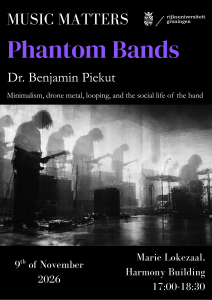
 Unlike many other postwar musical avant-gardes, minimalism developed a significant extension in the field of popular culture, most notably in drone metal in the twenty-first century. This development could be anticipated to some extent, given the inspiration and musical techniques that the early minimalists found in Black and nonwestern musics, and the importance they placed on lateral relations of authorship that departed from elite musical culture’s lionization of the composer-genius. But in the half-century of minimalism’s gradual unfolding, the ecological niche it once occupied has undergone its own profound transformations. On the one hand, the vernacular mode of production that once distinguished the popular field from fine art has been fully adopted by participants in the latter. On the other hand, popular music aesthetics developed a stratification of taste around typically masculinist repertoires like rock. For these reasons, the meaning of minimalism’s crossing into popular culture is inscrutable and even contradictory. Furthermore, the social relations of the band, which Patrick Nickleson has identified as so important to minimalism’s critique of western art music, were quickly incorporated into live music technologies that enable a single performer, on stage or in their bedroom, to replace the give-and-take of convivial musicality with its simulation in the form of loop stations. Examining examples from Terry Riley, Earth, Kali Malone, Steven O’Malley, and Justin Bieber, this talk tries to follow the reversals and extensions of minimalism’s crossover into the popular by continually inquiring into its production of the social.